

Key Takeaways
- Quality defatted soya flakes are crucial for efficient soy protein isolate production.
- Manufacturers should evaluate protein content, solubility, and moisture when selecting defatted soya flakes.
- Choosing a reliable defatted soya flakes manufacturer in India ensures consistent protein extraction and product quality.
- Understanding the differences between defatted soya flakes and flour can impact processing strategies.
- Microbiological quality and heat treatment history are essential factors in selecting raw materials for protein processing.
Gujarat Ambuja Exports Limited is a leading manufacturer of soya derivatives, including defatted soya flakes, flour, and grits for industrial applications. In soy protein isolate (SPI) production, the quality of the starting material directly influences protein recovery, purity, and processing efficiency.
As one of the established Defatted Soya Flakes Manufacturers in India, we understand why selecting suitable raw materials is essential for manufacturers seeking consistent protein extraction results.
Why Are Defatted Soya Flakes Important for Soy Protein Isolate Production?
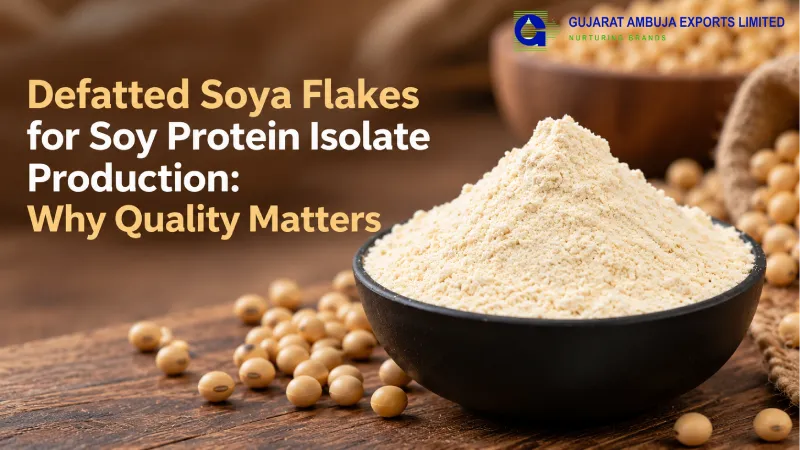
Defatted soya flakes are produced after removing oil from soybeans. Their high protein and low fat content make them a potential raw material for further protein processing.
During soy protein isolate production, manufacturers extract soluble proteins from defatted soybean material, separate unwanted components, and recover concentrated protein.
The quality of defatted soya flakes affects how efficiently protein can be extracted and purified. Poor-quality raw materials may introduce processing challenges, reduce protein recovery, or affect the characteristics of the finished isolate.
Key Quality Factors That Influence Soy Protein Isolate Production
Not all defatted soya flakes perform equally during protein extraction. Manufacturers must evaluate several characteristics before selecting raw materials.
- Protein Content: Higher and consistent protein content supports efficient extraction and predictable processing results.
- Protein Solubility: Adequate solubility is important because proteins must dissolve during the extraction stage.
- Moisture Content: Controlled moisture supports storage stability and consistent raw material handling.
- Residual Oil: Low residual fat helps reduce unwanted oil interference during processing.
- Heat Treatment: Excessive heating can denature proteins and reduce their extractability.
- Microbiological Quality: Suitable microbiological characteristics are important when selecting raw materials for food-related applications.
Leading Defatted Soya Flakes Manufacturers in India understand that these parameters influence downstream processing performance.
How Defatted Soya Flakes Affect Protein Extraction Efficiency
Protein extraction is one of the most important stages in soy protein isolate manufacturing. The process requires suitable raw materials to support protein separation and recovery.
A typical production sequence includes:
- Raw Material Preparation: Defatted soya flakes are prepared for extraction according to the manufacturer's process requirements.
- Protein Extraction: Proteins are dissolved under controlled processing conditions.
- Separation: Insoluble components are removed from the protein-rich liquid.
- Protein Recovery: Dissolved proteins are recovered through appropriate separation and precipitation techniques.
- Drying: The recovered protein is processed into a dry isolate product.
When flakes have suitable protein solubility and consistent composition, manufacturers can manage these stages more predictably.
At Gujarat Ambuja Exports Limited, we recognize the importance of raw material quality in supporting industrial processing requirements.
Defatted Soya Flakes vs Defatted Soya Flour for Protein Processing
Flakes and flour are both defatted soybean ingredients, but their physical forms create different handling and processing considerations.
| Quality Factor | Defatted Soya Flakes | Defatted Soya Flour |
|---|---|---|
| Physical Form | Thin, flattened pieces | Finely ground powder |
| Particle Size | Generally larger | Generally smaller |
| Handling | Suitable for processes designed for flake-based materials | Suitable for systems designed for fine powders |
| Extraction Behaviour | Depends on flake structure and processing conditions | Depends on particle size and processing conditions |
| Selection Criteria | Protein quality, solubility, moisture | Protein quality, solubility, moisture |
Both forms require appropriate specifications for their intended applications.
As one of the experienced Defatted Soya Flour Manufacturers in India, we understand that selecting the correct soybean ingredient depends on the manufacturer's processing technology and desired product characteristics.
What Should Buyers Check Before Selecting Defatted Soya Flakes?
For soy protein isolate manufacturers, procurement decisions should consider more than protein content alone.
Before choosing a supplier, review these essential requirements:
- Protein content and batch consistency
- Protein solubility and suitability for extraction
- Moisture and residual oil specifications
- Heat-treatment history and protein functionality
- Microbiological testing and relevant food-grade documentation
- Packaging, storage conditions, and supply reliability
Food-grade suitability must be confirmed before using defatted soya flakes for human-consumption protein isolate production. Feed-grade ingredients should not automatically be considered suitable for food manufacturing.
Businesses evaluating Defatted Soya Flakes Manufacturers in India and Defatted Soya Flour Manufacturers in India should request appropriate technical information and confirm the intended application before procurement.
Why Choose Us
At Gujarat Ambuja Exports Limited, we bring our experience in agro-processing and soya derivatives manufacturing to businesses looking for dependable soybean ingredients. Our portfolio includes defatted soya flour, flakes, and grits, supporting different industrial requirements. We understand that product selection depends on protein characteristics, processing conditions, and application needs. As a company serving diverse industries, we focus on quality, responsible sourcing relationships, and customer requirements. Our team can help buyers discuss available product specifications and identify suitable options for their manufacturing needs.
Conclusion
High-quality defatted soya flakes are an important starting point for efficient soy protein isolate production. Protein content, solubility, residual oil, moisture, and heat-treatment conditions can all influence extraction performance and final product characteristics.
For manufacturers, selecting appropriate raw materials helps maintain processing consistency and supports reliable protein recovery.
At Gujarat Ambuja Exports Limited, we recognize the importance of dependable soybean ingredients in industrial manufacturing. Businesses comparing Defatted Soya Flakes Manufacturers in India and Defatted Soya Flour Manufacturers in India should prioritize technical specifications, intended-use suitability, and consistent supply when making sourcing decisions.
Call to Action
Looking for reliable defatted soya flakes or flour for your manufacturing requirements?
Connect with our team to discuss product specifications, bulk supply requirements, and suitability for your intended application.
Call us: +91 79-61556677
Email: info@ambujagroup.com
Contact us today to explore the right soya ingredient solutions for your business.